
Once you understand how self-build finance works, the next step is turning that understanding into a plan: a proper budget, the right permissions, a complete application and a clear idea of what happens once the build is finished.
This is where the greatest risk in a self-build project sits, and where good advice earns its keep.

Planning your project properly
Careful planning is what makes the rest of this process straightforward rather than stressful. Before you approach a lender, you will want a clear budget, the right permissions in place and a realistic sense of what the project will actually involve.
Do you need planning permission?
Before building, you will need planning permission from your local planning authority. Some plots are sold with planning permission already in place, but not always, and even where it exists, you may want to alter it to get exactly the design you want.
This is where a planning consultant earns their fee. The process can be slow and, at times, frustratingly rigid, so understanding whether your plans are realistic before you submit a formal application can save significant time, cost and disappointment.
A good planning consultant will also advise on how to shape your application to give it the best chance of success.
Budgeting for your self-build
Start with the cost of the plot. Land without planning permission may look cheaper on paper but can bring additional cost and risk further down the line. If you need a mortgage to buy land and build a house, the land purchase and construction budget need to be considered together from the outset.
Once you have costed the land, turn to the build itself. Get quotes from several builders and suppliers, matched to your chosen construction method and materials.
Detailed plans matter here too. They give builders a clear brief to price against, and they are part of what a lender will want to see.
Build in a contingency of at least 10–20% of total project cost and speak to an adviser early. Understanding how much finance is realistically available to you shapes almost every other decision that follows.
Plan your budget before you apply
A free budget planner covering these cost areas is included in our Self-Build Budget & Documents Checklist.
A note on stamp duty
Stamp Duty Land Tax on a self-build is generally charged only on the cost of the land you are building on, not on the cost of the building work itself.
On a high-value project in particular, that distinction can represent a material saving compared with buying an equivalent finished home outright.
As with anything tax-related, always get advice specific to your circumstances before you commit.

Self-build mortgage eligibility and requirements
Self-build mortgages are a specialist product, and self build mortgage requirements vary between lenders. A number of high-street banks and building societies offer them, alongside specialist self build mortgage lenders with their own dedicated ranges.
Working with an adviser who knows this landscape well, rather than approaching lenders individually, makes a real difference to finding the right fit for your project.
Lenders will consider a number of factors when assessing your application.
Credit history
A strong credit score demonstrates that you manage money reliably.
Income & affordability
Your income and overall affordability will be assessed to establish whether you can comfortably meet repayments. If you are looking for a self build mortgage for self employed applicants, this includes considering how self-employment, foreign income or multiple income sources are presented.
Deposit & LTV
Your deposit size will affect your loan-to-value ratio and potentially the rate you are offered. A self build mortgage with a small deposit may be possible with some lenders, although the available options and pricing will depend on the wider application.
The project itself
Lenders will assess the viability of the project, including your plans, costings and the experience of your building team. Some lenders may also look favourably on previous homeownership or experience of managing an ambitious project.
How much can you borrow?
The amount you can borrow depends on your financial profile, your chosen lender and your available deposit. A self build mortgage calculator can provide a broad indication, but it cannot account for the full complexity of an individual project or lender criteria.
Lenders typically look at income, expenditure, credit history and the projected value of the finished home. Some base limits on a multiple of income, while others place greater emphasis on projected value.
Borrowing limits vary considerably by lender and project, so rather than quoting a single figure, this is one best discussed directly with an adviser against your specific plans.
Can I apply with a low deposit?
Some lenders do offer competitive terms for lower-deposit self-build projects, but a larger deposit reduces the loan-to-value ratio and generally improves the rate you are offered.
It is worth weighing this up before you commit to a figure.
What are typical self build mortgage rates UK borrowers might see?
Self build mortgage interest rates move with market conditions and individual circumstances but tend to sit above standard mortgage rates, reflecting the additional risk lenders take on with a project that is not yet built.
This is rarely the full picture: interest is usually only charged on funds actually drawn down. Most self-builders also move onto a standard residential rate once the build is complete, so the overall cost can compare favourably with financing an equivalent finished-home purchase.
Ready to discuss your self-build plans?
Our specialist advisers can look at your budget, deposit, income and project plans to help you understand how much you may be able to borrow and how your finance could be structured.
Tell us a little about your project and one of our advisers will be in touch.
How to get a self build mortgage: the application process
A complete self build mortgage application, prepared properly, makes for a smoother and faster result.
This is where having a dedicated adviser alongside you matters most. Pulling everything together properly and presenting it in a way lenders can assess quickly is often the difference between a straightforward approval and unnecessary delay.
Our full documents checklist, including every item you will need in a printable format, is available in the free Self-Build Budget & Documents Checklist.
After approval: managing your self-build mortgage
Once approved, the build itself can begin. Staying close to the drawdown process with your lender throughout construction keeps everything moving smoothly.
Fund release and monitoring progress
The defining feature of a self-build mortgage is the staged release of funds. These self build mortgage staged payments, or drawdowns, are designed to support the project as construction progresses.
At each agreed milestone, your lender releases the next tranche, giving you the cash flow to cover materials and labour as the project moves forward.
An independent surveyor will typically check progress at each stage before funds are released. How often these checks take place, and how detailed they are, will vary by lender and by the scale of your project.
Keeping careful records of costs, invoices and receipts, and updating your lender on progress as you go, avoids unnecessary delays. It is exactly the sort of ongoing detail your adviser will stay on top of alongside you.

Moving to a standard mortgage after completion
Once your home is finished, it is time to refinance. Planning your self build mortgage after completion is important because the next finance decision can affect your longer-term costs.
Many lenders offer a straightforward switch to their standard residential range at this point, or you can approach the wider market for a remortgage.
This is a good moment to reassess your finances properly, including the loan amount, term, whether a fixed or variable rate is more appropriate, and any fees involved. You can then choose a mortgage that fits your long-term plans rather than simply choosing the one that is easiest to move to.
Planning this second step before the build even starts, rather than treating it as a separate decision once the project is finished, is where the whole structure works most efficiently. It is one of the areas where we spend the most time with clients, because it is so often overlooked.
Self-Build for High-Value Projects
Larger or more architecturally ambitious builds benefit from an adviser with access to private and specialist lenders as well as mainstream building societies, rather than a single standard self-build lender.
This could include a bespoke architect-designed home, a high-value plot or a project involving an unusual construction method.
The same applies where your own financial profile is less straightforward.
We regularly arrange self-build finance for high-net-worth individuals, expats, foreign nationals and self-employed clients, and are experienced in handling scenarios such as foreign income, high loan-to-value requirements and Lombard lending.
None of this should rule a project out. It simply needs to be structured properly and presented to the right lender from the outset.
Curious how this looks in practice? Our case studies include an interest-only self-build mortgage arranged for one client, and a separate self-build mortgage completed for a client carrying out extensive refurbishment works.
Why Choose LDN Finance
With access to lenders across the whole of the market, LDN Finance acts as your partner in property finance, providing a personal service to ensure you are in control and confident throughout every stage of your self-build journey, from your very first enquiry through to the remortgage that follows completion.
Service
Service excellence is at the heart of our business. We are renowned for our highly personal and bespoke approach to arranging property finance, ensuring you feel confident throughout your self-build journey, not just at the mortgage stage.
Expertise
We thrive in demanding, challenging scenarios and work creatively in our negotiations with our trusted network of mainstream, private and specialist lenders to achieve the best possible outcome for your circumstances.
Relationships
We see you as a valued partner. Our relationship with you matters to us, and your adviser will continue to serve as your personal property finance partner long after your self-build mortgage is completed and over the line, through to the remortgage that follows.
Planning your self-build? Start here.
Practical resources to help you understand your mortgage options, prepare your budget and get the right documents in place.
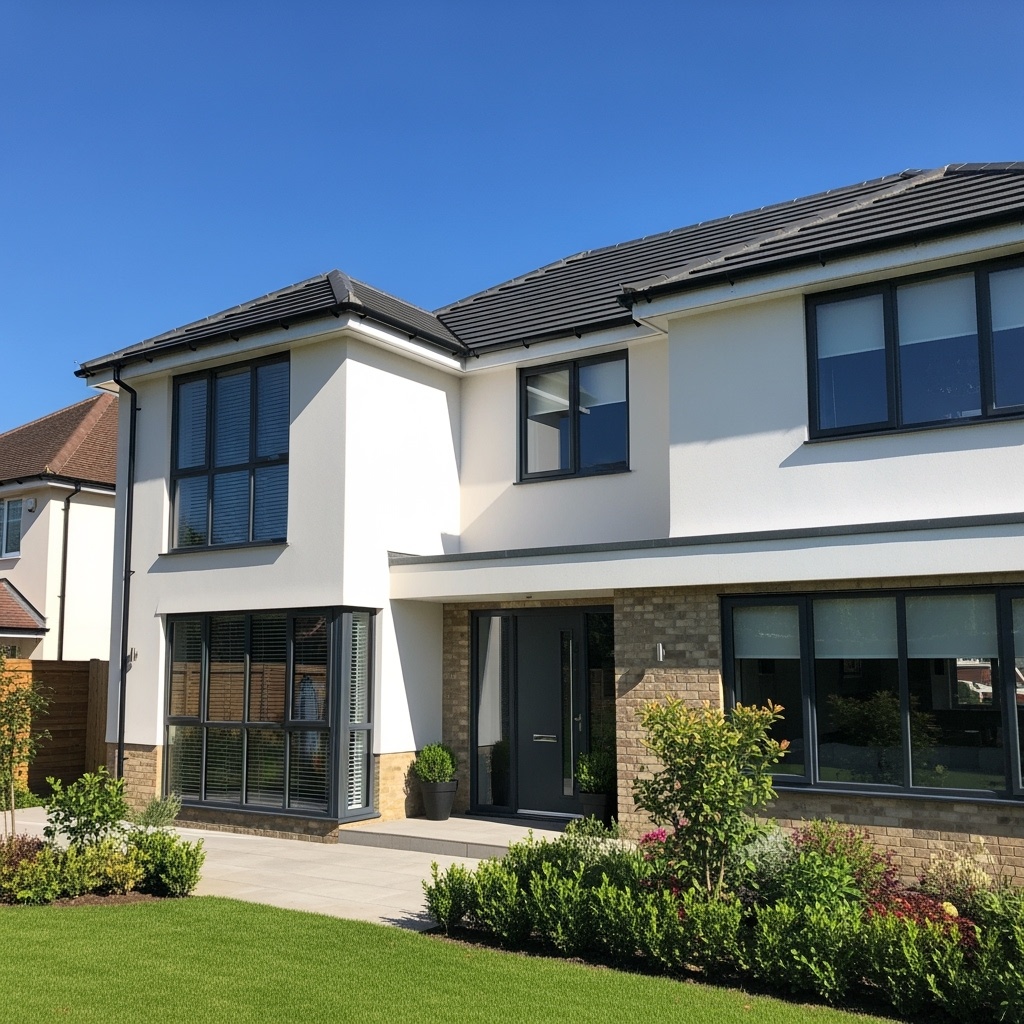
The Complete Guide to Self Build Mortgages
Understand how self-build finance works, from purchasing your plot and arranging staged funding through to completing your build.
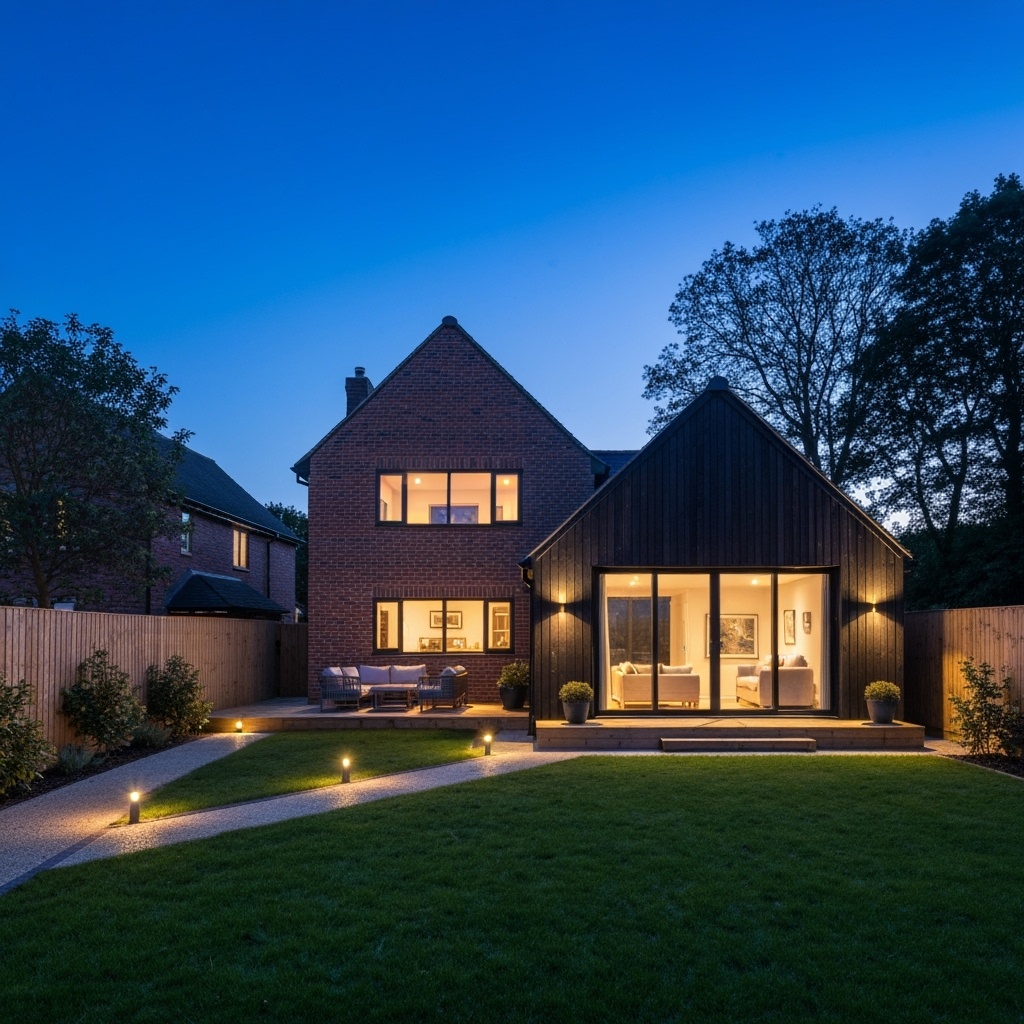
Your Self-Build Budget & Documents Checklist
Get organised before you apply with a practical checklist covering the key financial information and documents you are likely to need.
Frequently asked questions
How much deposit do I need for a self-build mortgage?
This varies by lender and project, but a larger deposit generally improves your loan-to-value ratio and the rate you are offered. Speaking to an adviser early means you can budget accurately before you commit to a plot.
Do I need planning permission before I apply for a mortgage?
Yes. Lenders will want to see evidence of planning permission as part of a complete application.
If a plot does not already have permission in place, or you want to alter existing consent, a planning consultant can assess whether your plans are realistic before you submit a formal application.
What other costs should I plan for beyond the mortgage?
Beyond the land and build costs, budget for architect’s fees, project management if you are not managing the build yourself, survey fees, solicitors’ fees, lender and adviser fees, stamp duty, insurance, fixtures and fittings, plus a contingency fund.
Speaking to an adviser early gives you a clear picture of how much finance is realistically available before you commit to a budget.
Which lenders offer self-build mortgages?
A number of traditional high-street banks and building societies offer self-build products, alongside specialist self-build lenders with dedicated ranges.
Because this is a smaller, more specialist part of the market, working with an adviser who knows the full lending landscape, rather than approaching a single lender directly, generally gives you access to better terms and a higher chance of approval.
Will I pay more stamp duty on a self-build?
Generally less than on an equivalent finished home. Stamp duty on a self-build is usually charged only on the cost of the land, not the cost of construction.
Always get tax advice specific to your circumstances.
What happens once the build is finished?
Most self-builders remortgage onto a standard residential rate once the build is complete, often against a valuation comfortably above the combined cost of land and build.
Can LDN Finance arrange finance for a high-value or architecturally ambitious self-build?
Yes. We regularly arrange high-value self-build finance for high-net-worth individuals, expats, foreign nationals and self-employed clients, including cases involving foreign income and high loan-to-value requirements.
Ready to turn your self-build plans into a reality?
Building your own dream home is no small feat, but with the right finance structured properly from the start, it does not need to feel like one.
Contact LDN Finance for more information about financing a self-build property and get started today.
Get in touch with one of our advisers to talk through your project. And do not forget to download our free Self-Build Budget & Documents Checklist to plan before you apply.
Understanding Self-Build Mortgages
Read Part 1 for a full introduction to how self-build mortgages work, the different types of self-build finance and how they compare to a standard mortgage.
Your home may be repossessed if you do not keep up repayments on your mortgage.
This guide is general information, not advice. For guidance on your specific circumstances, please speak with an LDN Finance adviser or seek independent financial and legal advice. LDN Finance Limited is authorised and regulated by the Financial Conduct Authority.